Pandit Hariprasad Chaurasia Biography
Discover the inspiring life story, musical journey, and unmatched legacy of Pandit Hariprasad Chaurasia, the legendary Indian classical flutist (Bansuri maestro) who took the bamboo flute to the global stage.
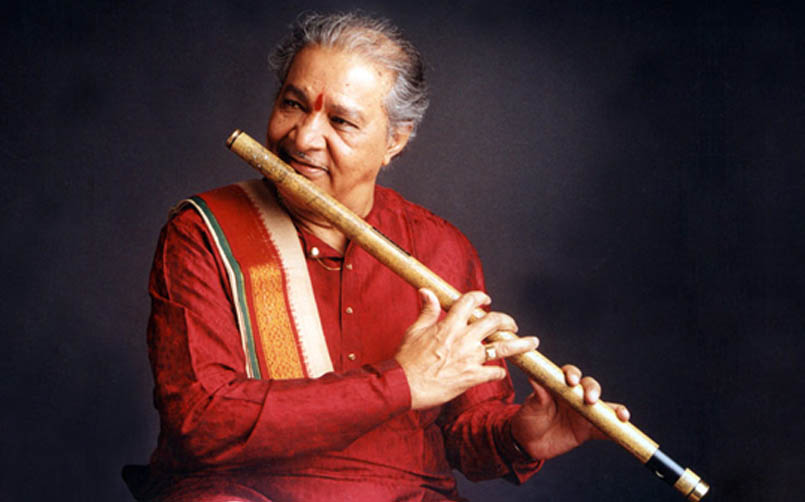
Quick Profile Overview
- Profession: Classical Flutist (Bansuri Maestro), Composer
- Genre: Indian Classical Music (Hindustani)
- Famous Awards: Padma Bhushan, Padma Vibhushan, National Film Award
Early Life and Struggles
Born in Allahabad (now Prayagraj), Uttar Pradesh, Pandit Hariprasad Chaurasia faced initial struggles in his early life. His father was a wrestler, and he was expected to join the same profession. However, young Hariprasad had a deep inclination toward music. Secretly, he started learning classical vocal music from Pandit Rajaram and later shifted his focus to the flute (Bansuri) under the guidance of the blind flutist Pandit Bholanath Nath of Varanasi.
Musical Career and Global Recognition
Hariprasad Chaurasia joined All India Radio (AIR), Cuttack, as a composer and performer in 1957. His unique style of playing the bansuri—bringing classical intricacies to a folk instrument—revolutionized Indian classical music. He collaborated with numerous international artists and legendary Indian musicians like Pandit Shivkumar Sharma (forming the famous duo "Shiv-Hari"), composing memorable scores for Bollywood blockbuster films like Silsila, Lamhe, and Chandni.
Breath Control Techniques and Left-Handed Playing Style
The extraordinary artistry of Pandit Hariprasad Chaurasia relies heavily on his peerless breath control and unique left-handed playing style. On an instrument as minimalist as the bansuri, which features no mechanical keys or strings, every nuance of pitch and emotion depends entirely on the artist's breath management and finger dexterity. Pandit Ji mastered long, sustained notes (Swar Sadhana) and deep, regulated airflow that allowed him to produce deeply resonant, soulful tones across everything from compact flutes to massive bass instruments. Furthermore, his decision to play left-handed marked a revolutionary turning point in his career. When he sought formal tutelage under the legendary Guru Annapurna Devi, he made the remarkable and demanding choice to switch his playing orientation from right-handed to left-handed to perfectly mirror and absorb her direct instructions. This bold adaptation not only demonstrated his absolute humility and relentless dedication as a student, but it also established a gold standard for modern bansuri learners and classical training techniques today.
Awards, Honors, and Legacy
Recognized globally for his immense contribution to Indian classical music, Pandit Hariprasad Chaurasia has been honored with India's highest civilian awards, including the Padma Bhushan (1992) and the Padma Vibhushan (2000). He has also served as the artistic director of the World Music Department at the Rotterdam Music Conservatory in the Netherlands, mentoring a new generation of Bansuri players worldwide.
A Journey Against All Odds
Mastering the art of the Indian classical bamboo flute requires more than just holding the instrument; it demands adopting the disciplined methodologies championed by legendary maestros. To become an exceptional bansuri lesson learner by following Pandit Hariprasad Chaurasia’s revolutionary techniques, students must first understand that true progress originates from breath control, deep listening, and unwavering patience. Pandit Ji transformed the bansuri from a folk instrument into a global classical powerhouse by experimenting with longer, wider-bore flutes that produced rich, resonant bass octaves. Aspiring learners aiming to emulate this mastery should incorporate comprehensive breath management exercises into their daily practice routines, focusing on long, sustained notes (Swar Sadhana) to build lung capacity and steady air compression.
Another cornerstone of learning through Chaurasia’s stylistic approach is cultivating deep humility and absolute dedication to the Guru-shishya parampara. When studying online bansuri lessons or advanced classical ragas, students often rush through finger placements and speed exercises. However, the legendary maestro's journey teaches us that precision in embouchure, proper finger articulation over the bamboo holes, and emotional expression (Meend and Gamak) take precedence over rapid execution. To optimize your learning curve and make your practice sessions SEO-friendly for personal growth and musical blogs, structure your routine around systematic milestones: start with sound production, transition into tonal purity, practice complex Ragas meticulously, and always record your practice to self-evaluate your tonal warmth against professional benchmarks.
"The bamboo flute is the simplest instrument. It has no strings, no keys—just your breath and a piece of wood. It is the closest thing to the human soul."
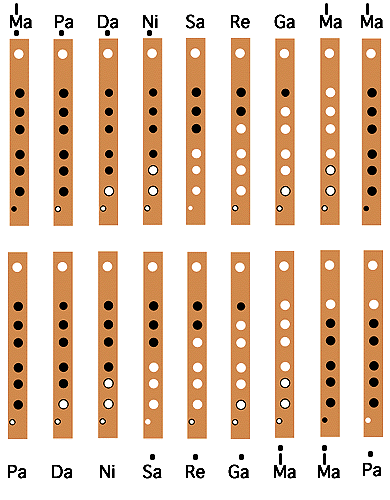
CLASSICAL CRAFTSMANSHIP
The premium bamboo flutes championed by the maestro
How He Changed the Bansuri Forever
Prior to his contributions, the bansuri was largely seen as a folk instrument. Pandit Ji introduced structural modifications and design adjustments to create a global standard.
Technical Innovations
He pioneered the use of longer and wider bamboo flutes (especially E Bass and G Natural Medium) in classical concerts. By widening the bore, he generated deeper, resonant bass octaves that carry beautifully in modern acoustic halls.
Globalizing Indian Classical
As a master of cross-genre fusion, he collaborated with global icons like John McLaughlin, George Harrison, and Jan Garbarek, introducing the soul-stirring melodies of Indian classical Ragas to audiences worldwide.
Dedicated Gurukuls
Through his dedicated Gurukuls (Vrindaban Gurukul in Mumbai and Bhubaneswar), he ensured that the deep secrets of classical breath mechanics and finger placement are passed down safely to future generations.
Milestones & Prestigious Awards
Padma Bhushan
Awarded in 1992 for outstanding contribution to the arts of India.
Padma Vibhushan
Awarded in 2000, India's second-highest civilian honor.
Sangeet Natak Akademi
Presented in 1984 as national recognition for performance mastery.
Global Recognition
Knight of the Order of Arts and Letters (France) & multiple honorary Doctorates.